While I first really learning about theatre, I came across a couple of columnists that I began to read regularly because their columns were informative, well-written and endlessly entertaining. They were Peter Filichia and Ken Mandelbaum. I started reading them in early 2001 when I discovered that there were several Broadway sites. Once I read a column by each writer, I went back and devoured their archived writing. I learned more in those hours than I did in any classroom (ask my musical theatre professor, he enjoyed having me there as his fact checker).
Peter Filichia continues his "Diary" on Theatermania Monday, Wednesday and Friday (and I highly recommend checking it out). However, Ken Mandelbaum's column on Broadway.com stopped abruptly in early 2006 and very little has been heard from him. Granted, it's not surprising as he left the website as it was shifting away from promoting news and criticism and becoming more about selling tickets. Ken would offer the latest Broadway gossip, casting rumors as well as review major musicals and cast CDs, DVDs, etc. When he wasn't doing any of the above, he was recalling shows of years past, with laser precision in his detail about everything no matter how obscure. Shortly after Ken's departure, the website came up with its insipid "Word of Mouth" reviewing system.
Aside from his column, he also penned two books: A Chorus Line and the Musicals of Michael Bennett and probably his most substantial contribution to date: Not Since Carrie: 40 Years of Musical Flops. The latter covers major flops from 1950 through 1990/91 and manages to be very informative and funny while informing us why these shows failed. Lord knows we've have enough in the last 18 years to warrant an update on his behalf.
When I was discovering Patricia Routledge on the original cast album of Darling of the Day and a live recording I'd heard of 1600 Pennsylvania Avenue, I sent him an email asking him about her career. He sent a detailed reply; practically an entire column's worth of information in the body a simple email. That was a year and a half ago, and he's yet to surface in any format or venue since. His disappearance from Broadway.com, being as abrupt and unannounced (I still recall going back periodically to check to see if he had come back) left a certain void in online theatrical journalism, such that he's even warranted his own place in the All That Chat FAQ. His older columns were archived and available, but they appear to be harder and harder to find as Broadway.com keeps reinventing itself.
Hopefully, he's busy taking care of that update of Not Since Carrie and will be resurfacing soon. So Ken, if you read this, please come back - you're still greatly missed.
Friday, September 18, 2009


Thursday, September 17, 2009
Blog Day Afternoon
Last Wednesday afternoon, a group of theater bloggers gathered at the Red Eye Grill on 7th Avenue across from Carnegie Hall for the first ever press event specifically for bloggers, made possible through Broadway's Best Shows. The blogosphere was out in full force to sit around and chat with the cast and creatives behind Superior Donuts, the latest Steppenwolf to Broadway transfer that started previews last evening at the Music Box Theatre. This marks the second consecutive Tracy Letts play to be performed in the venue, following the hit run of his Tony and Pulitzer winning August: Osage County which closed in June.
There were several tables set up on the upper floor of the restaurant. Irene Gandy, one hell of a good press agent as well as one of the great fashionistas of the NY theatre community, told us that the afternoon was to be a bit like speed dating. (I've seen Irene at various openings, closings and other events over the past couple of years and she is always decked out in the most fabulous hats you've ever seen). Anyway, we'd all gather around the round tables and every five minutes, the actors as well as Tracy Letts and director Tina Landau would get up and switch tables.
 Much to the delight of SarahB and myself, we found the delightful Kate Buddeke seated to our right. Kate tore up the Shubert Theatre as the brassy Miss Mazeppa (with her revolution in dance) in the excellent 2003 revival of Gypsy with Bernadette Peters, helping to bring down the house with "You Gotta Get a Gimmick." She is a native of Chicago and has spent the last five years doing a great deal of theatre in her hometown where she was one of the original members of the American Theatre Company. I have to say, having met her briefly at Angus a week earlier and getting to chat with her here, she is a real pleasure to know and it is our great pleasure that she is back on Broadway.
 Sarah and I found ourselves with our pal Jimmy as well as a correspondent from the Polish American Journal, who asked incisive questions about the importance of ethnicity portrayed within the play. And though I've never speed-dated, I guess it's the same organized chaos of going from table to table. Everyone was excited for the play, and to be on the verge of starting performances in NY. I didn't ask too many questions, but the one I did asked, "How has the play evolved since Steppenwolf?" It turns out that Letts has gone back and made some revisions. I never saw it in Chicago, so I would be curious to compare the frozen version that opens in two weeks with the text the actors were using over a year ago.
With the exception of Buddeke and Michael McKean, the actors in the ensemble are making their Broadway debuts; the excitement was palpable as they discussed what it was like to be working on Broadway. Landau and Letts talked about the differences between theatre in NY and Chicago. There is a different lifestyle, more relaxed and with a greater sense of community that both Letts and Landau said is hard to find in NY. The cost to create theatre in Chicago is also less than in NY, and it really seems that all the elements combined have allowed so many prestigious theatre companies to flourish. Michael McKean was at our table chatting with us after doing a quick interview with NBC's Jeffrey Lyons. All of a sudden a press rep escorts a dapper and unassuming gentleman to our table. Rather stunned, we are all introduced to Michael Feinstein, whose upcoming Broadway venture All About Me, was just announced the day before. He sits down at the table, and the four of us marvel in seeing the two stars meet for the first time. Turns out that McKean and his beautiful wife, Annette O'Toole, had performed at Feinstein's in Chicago and McKean's father once worked at Columbia Records for Goddard Lieberson (yes, boys and girls, the Goddard Lieberson!). Feinstein proved a charming raconteur with fun stories about the Gershwins and Lehman Engel. Hell, he even had an anecdote involving my name.
The event was over within an hour, as the actors were making their way to the invited dress rehearsals of either A Steady Rain, another Chicago import, or Bye Bye Birdie. I only wish we had more time with all of them; they were all so eloquent and passionate about their work I could have listened all night. But I did go home with what was quite possibly the best donut I've ever tasted in my life. No idea where they came from, but Mr. Richards should consider selling them at the Music Box. I know I'd love another one when I see the show.
There were several tables set up on the upper floor of the restaurant. Irene Gandy, one hell of a good press agent as well as one of the great fashionistas of the NY theatre community, told us that the afternoon was to be a bit like speed dating. (I've seen Irene at various openings, closings and other events over the past couple of years and she is always decked out in the most fabulous hats you've ever seen). Anyway, we'd all gather around the round tables and every five minutes, the actors as well as Tracy Letts and director Tina Landau would get up and switch tables.
 Much to the delight of SarahB and myself, we found the delightful Kate Buddeke seated to our right. Kate tore up the Shubert Theatre as the brassy Miss Mazeppa (with her revolution in dance) in the excellent 2003 revival of Gypsy with Bernadette Peters, helping to bring down the house with "You Gotta Get a Gimmick." She is a native of Chicago and has spent the last five years doing a great deal of theatre in her hometown where she was one of the original members of the American Theatre Company. I have to say, having met her briefly at Angus a week earlier and getting to chat with her here, she is a real pleasure to know and it is our great pleasure that she is back on Broadway.
 Sarah and I found ourselves with our pal Jimmy as well as a correspondent from the Polish American Journal, who asked incisive questions about the importance of ethnicity portrayed within the play. And though I've never speed-dated, I guess it's the same organized chaos of going from table to table. Everyone was excited for the play, and to be on the verge of starting performances in NY. I didn't ask too many questions, but the one I did asked, "How has the play evolved since Steppenwolf?" It turns out that Letts has gone back and made some revisions. I never saw it in Chicago, so I would be curious to compare the frozen version that opens in two weeks with the text the actors were using over a year ago.
With the exception of Buddeke and Michael McKean, the actors in the ensemble are making their Broadway debuts; the excitement was palpable as they discussed what it was like to be working on Broadway. Landau and Letts talked about the differences between theatre in NY and Chicago. There is a different lifestyle, more relaxed and with a greater sense of community that both Letts and Landau said is hard to find in NY. The cost to create theatre in Chicago is also less than in NY, and it really seems that all the elements combined have allowed so many prestigious theatre companies to flourish.
 Michael McKean was at our table chatting with us after doing a quick interview with NBC's Jeffrey Lyons. All of a sudden a press rep escorts a dapper and unassuming gentleman to our table. Rather stunned, we are all introduced to Michael Feinstein, whose upcoming Broadway venture All About Me, was just announced the day before. He sits down at the table, and the four of us marvel in seeing the two stars meet for the first time. Turns out that McKean and his beautiful wife, Annette O'Toole, had performed at Feinstein's in Chicago and McKean's father once worked at Columbia Records for Goddard Lieberson (yes, boys and girls, the Goddard Lieberson!). Feinstein proved a charming raconteur with fun stories about the Gershwins and Lehman Engel. Hell, he even had an anecdote involving my name.
The event was over within an hour, as the actors were making their way to the invited dress rehearsals of either A Steady Rain, another Chicago import, or Bye Bye Birdie. I only wish we had more time with all of them; they were all so eloquent and passionate about their work I could have listened all night. But I did go home with what was quite possibly the best donut I've ever tasted in my life. No idea where they came from, but Mr. Richards should consider selling them at the Music Box. I know I'd love another one when I see the show.
Wednesday, September 16, 2009
We Need a Little Mame

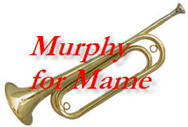
SarahB and I love Mame. Period. It's got a sublime musical theatre score and a fun and funny book with immensely entertaining characters. The show hasn't been seen in NY since a failed revival in 1983, so we often discuss the necessary ingredients to successfully revive this gem of a musical. The title role is such a difficult star turn, because Mame as a character is rather static - the most that changes in the character over the course of the musical play is her wardrobe (and how); however, Mame is the embodiment of an ideal - a philosophy that life is something to celebrated, experienced and most importantly lived. In order to effectively pull off the musical, you need to find a woman who's at least in her late thirties. She needs to sing, dance, act - but she also needs to have the presence to execute Mame's joie d'vivre, while remaining a funny, boozy, lovable, classy, heartfelt, eccentric, bohemian, patrician, progressive madcap. That's no small order.
When the musical opened at the Winter Garden, a mere ten years after the overwhelming success of the original play the character of Mame was once again a unanimous audience favorite. Only this time she was supported by the stellar music and lyrics of Jerry Herman, and with a little more heart and less eroticism. Oh -and they gave Vera some of Mame's more potent zingers (that's what you do when you cast Bea Arthur). Angela Lansbury became the toast of Broadway, defying expectations and odds to come out the unlikely musical theatre star of the decade. Her Tony-winning, two year run in the original Broadway cast of Mame established her as the leading musical theatre diva of her generation, and held onto the title until 1983, when she turned her attentions to some little old TV show , and well, the rest is history.
The original production of Mame, while it didn't run as long as Hello, Dolly!, followed the earlier show's example by bringing in major stars to replace the lead. The part was so good, even Judy Garland auditioned for it (which would have been perfect, if not for the difficulties surrounding her drug and alcohol abuse). Janis Paige, Celeste Holm, Jane Morgan and Ann Miller all played the role in NY, while Angela took the show on tour. Ginger Rogers opened the London company. For as good as the ladies were considered in their roles, the part was still closely identified with Lansbury (the 1974 film need not apply).
So we were thinking that in order to bring Mame successfully into the 21st century, perhaps it was time to think outside of the box. Not update the show or make it "rock and roll" hour with Tilda Swinton. But just find something new to bring to the show to make it something audiences want to see. Broadway doesn't manufacture stars the way it once did, so it's likely that a big name star needs to be attached in order to make a successful commercial venture in NY. (Producers couldn't even get the 2006 Kennedy Center production with Christine Baranski into town for a limited run). Sarah and I have someone in mind for the show, an unlikely choice but one that we think would work gangbusters, but we're keeping a lid on that for right now.
So instead I'll put it to you: who is our Mame?
Oh - and one more thing - I pulled down my copy of the published libretto to look at the text and reread the foreward by Jerome Lawrence and Robert E. Lee (who not only wrote the musical, but the play upon which it was based) The co-authors touch on the relevancy of the character and what makes Mame Dennis Burnside so indelible. I thought I'd share:
"Although our love affair with Mame spans more than a decade, we approached her as the central figure of this musical as if we were meeting the lady for the first time.
To spark the musical Mame with a life of her own, we did our best to forget we had written the play Auntie Mame. And a very pleasant miracle happened. Usually the conversion of a straight play into a musical means bleeding off the believability when the trumpets start blowing, and the musical tends to be a cartoon of the play on which it was based. But the opposite seems to have happened here.
Many minds have shaped this remarkable lady: Patrick Dennis who created her in his best-selling novel, and now Jerry Herman, who has written a score which underscores the truth and warmth of the people who populate Three Beekman Place.
Mame herself seems to have plunged into the joyful work of making this musical. She is an almost unique figure in modern fiction: Mame refuses to be imaginary! She is not a fondly Remembered Mama or a Matchmaker going back to the gaslights of Fourteenth Street. Mame is more interested in torches along the Ganges and the lightning bugs of Peckerwood. She virtually pole-vaults out of the gaiety of the Twenties into lunar orbit, soaring high above depressions, war and worries, taking with her a wide-eyed little boy.
We always long for what we don't have. This seems to be the Year of the Mole - a time of blindness and confusion, of fuzzy aims and fading faith. Our theater lately has been in a dark age, reflecting only shadows. Mame somehow lifts a flame in that blackness. She has optimism! Zest! Bounce! Even when she isn't quite sure where she's going. Mame knows, by God, she'll get there!
All of us, even the most despondent and disillusioned, would like to be like Mame. Or we wish she would take us up by the hand, as she does Patrick, and convince us that our planet isn't such a shabby place. We want to hear her sing "Open a New Window" in a decade when so many of us are pulling down the blinds and locking the shutters in pretended security. Mame is fun, but not mere escapist fare: she sings out a wish to run toward life, not away from it.
We have seen Mame's indomitable spirit embodied in dozens of stars in dozens of countries. Her battles with Babcock and her romance with Beau have been eloquently expressed in the major languages of the earth. But no translation could be more fortunate than the musical language of Jerry Herman. And no one could lift the flame of Mame higher than Miss Angela Lansbury.
But the audience is always the thermometer of the theater. A blazing conception can sputter out like a match in an ice cube tray unless it sends its singular incandescence across the footlights. The flame of Mame actually comes from everyone who is warmed by her daring and set aglow by her impudent but loving laughter."
-Jerome Lawrence & Robert E. Lee, 1967, Random House
Monday, September 14, 2009
Celebrating Bea Arthur

I have never felt the necessity to attend any memorial service for any celebrity or theatre star. With those actors and creators that I idolize, I usually recall their work and appreciate the legacy that is left behind. In most cases, I have never encountered the person except through their work, so I don't generally feel a personal connection.
However, today was different. This afternoon at the Majestic Theatre, the theatre and TV community gathered to celebrate the life of the one and only Beatrice Arthur. The actress, who died this past April at the age of 86, was more than actress and comedienne; she was an icon. Her statuesque presence, her incisive cutting way with a line or a glare and that baritone voice were part of the unique package that make an unlikely star of the working actor at the age of 50.
As a child I knew who she was. She was that really funny one on The Golden Girls. I think I may have seen an episode or two around the time I was ten, but in all honesty the show didn't hold much ground with me then and I went on with my life. My appreciation for Bea Arthur started around the time I was fifteen years old and TV Land started airing reruns of Maude, the landmark show and ultimately staunch character that propelled the respected New York actress into television stardom.
Watching these reruns of this daring, controversial series, I began to appreciate what it meant to be funny. Bea could be funny without doing much of anything. One lengthy glare was a enough to reduce the studio audience to gales of unstoppable laughter. Maude Findlay was the greatest feminist of Tuckahoe, NY and liberal to a fault. She took on every cause imaginable, with the show tackling alcoholism, drugs, menopause, plastic surgery, infidelity, the difficulties of marriage and homosexuality. Oh, and of course that famous episode where Maude decides to have an abortion. One of the funniest things I've ever seen in my life was Bea Arthur throwing an overcoat at Adrienne Barbeau in the episode "Nostalgia Party." (It has to be seen to be fully appreciated. Unfortunately five seasons of the series remain unreleased on DVD). When I finished with Maude I moved onto The Golden Girls when I was 16 going on 17, for continued hilarity. And of course, there were the cast albums of Mame and Fiddler on the Roof.
My comic sensibilities were shaped by two individuals: my father and Bea Arthur. I learned from Bea that sometimes doing nothing was funnier than a quip and even dared to hold an extra couple of beats for impact, and while I will never be as funny as she I certainly learned how to get a laugh. Upon hearing that there would be a memorial service, I figured that she was such an important part of shaping my interests and my own sense of timing that I would really like to go.
I arrived at the Majestic Theatre around 10AM, mildly surprised to find myself about thirtieth on line. That soon shrunk a bit as it turned out there were several tourists who thought it was the queue to purchase tickets for Phantom (boy would they have been in for a surprise...). We were informed the house would be opening at 12:30. As that time approached, the line for the public stretched from the Phantom marquee to Shubert Alley (possibly farther, but I wasn't about to step out of line to see). After they let in those with invitations, they opened the doors to the public.
We were led down into the lobby and handed a Playbill that sporting a sketch of Bea from Just Between Friends on the front. On the press line, I caught the vivacious Tyne Daly being interviewed. I also caught sight of Karen Akers, Charles Busch, Julie Halston and The seating was general admission, very similar to the Theatre World Awards, with various seats reserved for VIPs and press. I managed to snag a really nice seat in the center orchestra, at about Row M. (One of the most interesting things about the orchestra section at the theatre is the unusual rake in the seating). Onstage was a large projection screen with a large publicity shot of Bea that was seen in the advertising for Bea Arthur on Broadway. There were two podiums on each side of the stage, as well as grand piano center stage. Easy listening favorites of Sinatra were piped into the theatre as people were seated.
The house is abuzz with theatre folk conversing with one another - total strangers around me are sharing their favorite Bea moments. Most talk Golden Girls, but I overhear some talk of Maude and Fiddler. Friends and VIPs are milling about in the front orchestra section. About 1:10PM, the house lights are dimmed and applause starts and builds before anything has happened. (I've officially conquered the Majestic. Take that, POTO!). Suddenly Dame Edna is heard over the PA, as they play the pre-show recording made for the Australian run of Bea's one woman show.
The afternoon's host, Bea's closest friend Angela Lansbury, emerges from the wings in a sophisticated white pantsuit and receives a standing ovation. The five time Tony-winner is very gracious but quickly calms the audience down. After a beat she speaks, "I have a little secret I'd like to impart that I hope doesn't give you too much of a start..." Ms. Lansbury then steps center stage where she proceeds to sing her pal's signature song from Mame while a slideshow of photos is presented on the screen behind her. After a brief introductory, in which she welcomes everyone and jokes how Bea would likely disapprove of the whole event, she presents Norman Lear to the audience.
Lear, the groundbreaking producer of practically every important sitcom of the 1970s, talked about seeing Bea Arthur in the 1955 off-Broadway Shoestring Revue where she sang the song "Garbage." He kept her in mind when he was working on other projects, including The George Gobel Show in the 1960s. He called her and asked her to fly out to guest-star as Archie Bunker's liberal cousin Maude in a one-shot appearance on All in the Family. Well, the rest is history. Lear commented, "I've lost a lot of friends recently, but no one seems less gone and more alive than Bea." He was the first of many to talk about her way with timing and understanding the essence of comedy. Lear maintains that out of all the laugh-makers he's worked with over the years, none have made him laugh like Bea.
Sheldon Harnick, the lyricist for both Shoestring Revue and Fiddler on the Roof was next, and he talked about writing "Garbage," to spoof the dramatic torch songs with inane lyrics, which she performed with "her unerring sense of comedy." Another Shoestring alum, Chita Rivera, emerged to talk about the joy they shared as colleagues and commented, "The one thing I wanted Bea to stop was walking down 9th Avenue in her bare feet." Her disdain for footwear was a running topic throughout the afternoon. Rivera also said, "She would allow you to imagine what she was thinking - now that was really funny."
Angela came back onstage to talk about first getting to know Bea while they prepare for Mame in 1965. She said that while they were always "Bosom Buddies" onstage, they really became bosom friends in later years, after both had successful TV series. They ended up living near each other in California, and their children became friendly. Lansbury got quite emotional as she recalled her husband, Peter Shaw's final illness and how Arthur was there with food, comfort and her friendship during those difficult days.
Next up was Bea's sister, Kay Gray, who talked about Bea's three passions - Cary Grant, show business and animals. She talked about how her big sister was there to advise her, teach her to jitterbug, started chain smoking at 12 and ran away to sing with a band at 13. When Ms. Gray was going to visit the set of Maude, she told her sister to give her a part - that she could play her younger sister. When she arrived on the set, Bea told her in that inimitable style, "When you're on my show, you'll be my OLDER sister." Six weeks before Arthur's passing, her sister was with her in her bed. The two were sharing memories and stories. Arthur turned to her sister and said, "I've had a wonderful life. I've done everything I ever wanted to do." Later, Arthur's two grown sons, Matt and Daniel Saks, spoke fondly of their loving, down-to-earth hands-on mom, who wasn't above flying in a pen pal to be a prom date and who was happiest when throwing their weddings.
Rosie O'Donnell recalled the night she met Bea - at a Manhattan restaurant where she and her brother drunkenly sang the Maude theme song to her. When they finished, she held the trademark beat before bursting out in a gale of laughter, hugging Rosie and the two became friends. She told her "I know you. You're a funny kid." O'Donnell got emotional as she discussed how Bea Arthur's portrayal of Maude Findlay "taught my generation how to be a feminist."
Bea's co-star on Maude, Adrienne Barbeau was next. The actress recalled her total acceptance on the set, with Bea the first to arrive and the last to leave. The up and comer one time asked the star about her acting technique - if there was something that Arthur relied on when she was having difficulty creating a character. Bea said, "Oh shit, darling. You just say the words as though you mean them." Probably the best acting advice I've ever heard. Then Charlie Hauck, one of Maude's writers recalled the actress' spontaneity, down to earth charm and how she saved a dog on Sunset Boulevard for them to find out it was Barbra Streisand's dog.
Zoe Caldwell was neighbors with Bea Arthur when both ladies resided in Pound Ridge, NY. The acclaimed actress tore up the theatre with her distinct, dry deliver turning the mundane into the hilarious as she recalled their relationship She spoke fondly of their friendship, citing that they were in Pound Ridge - they needed each other. Arthur assumed the role of big sister in their friendship and doled out advice and suggestions - often what play or movie to see. Her reasoning: it will be good for you. "Then," said Caldwell, "she'd come along to make sure you got the right thing from it."
One of these suggestions was to go see Kate Hepburn in Coco. Bea opined, "We'll sit front row center...so we can't escape. We will watch her and watch her and watch her." Caldwell said, "And we watched her...and watched her...and watched her... and Bea had to cry. *pause* It wasn't a sad musical...but we cried all throughout. I suppose it was good for us..."
Carol Arthur DeLuise was introduced and she discussed Larry Gelbart, the writer who died this past Friday. Gelbart had been invited to Bea's memorial but had to decline due to his ill-health. However, she did send a letter which Mrs. DeLuise read, that recalled seeing The Threepenny Opera off-Broadway and said "She could do with a punch or a line what Ethel Merman could do with a song." Then Miss Coco Peru, a drag performer and close friend of the star was asked to recreate "A Mother's Ingenuity," a hilarious piece that is included in Bea's one woman show.
Jerry Stiller and Anne Meara came on and honored Bea with their old routine. They jokingly talked about themselves, but kept the audience in stitches for a good ten minutes. The script supervisor of The Golden Girls recalled special moments with Bea, and was in charge of getting the ladies to sign photographs. On one afternoon during the height of Bobby McFerrin's popularity, he successfully dared her to sign "Don't worry, Bea Arthur."
And then there's Rue McClanahan. McClanahan had the opportunity to co-star with Bea in both Maude and The Golden Girls and offered a window into the compassionate, caring maternal woman. When Rue's mother died of a heart attack, McClanahan found herself alone on Thanksgiving the day after the funeral and called Bea. The star had McClanahan come to her house where she put her in bed, fed her and made sure she was comfortable.
While the audience was still dabbing their eyes at this heartfelt remembrance, Rue switched gears and talked about Bea's bawdier side, claiming that she was not quite herself after she'd had a few drinks. At the opening night of Bea Arthur on Broadway, Rue and her husband were invited to the show and after party. Her husband went over to introduce himself to Bea, who was sitting at a corner table with her back to everyone and thanked her for the invitation. Bea turned and looked at him for one of those trademark beats, then grabbed him and drunkenly slurred, "You're Rue's husband! I love Rue... *pause* Betty's a cunt." The anecdote was so unexpected and the laughter so intense that McClanahan (whose impersonation was the best of any of the speakers) could barely restore order.
The afternoon progressed with speakers from PETA and the Ali Forney Center, representing two causes that were near and dear to Bea's heart: animal and gay rights. Dan Matthews, the vice president of PETA, talked of finding himself - a staunch vegan activist - in Arthur's kitchen helping her prepare a meatloaf (after she gave him one of her withering glares). Carl Siciliano, executive director of the AFC talked about how Bea really committed herself to helping the organization, donating money and raising awareness. She even flew to NYC to perform a benefit performance of her one woman show to raise money for them. The Center, which provides shelter for homeless LGBT youth, is naming a residency in her honor. Other speakers included Daryl Roth, who produced Bea on Broadway and Billy Goldenberg, Bea's long-time friend and collaborator.
Interspersed throughout were clips of Bea at her finest: singing "My Way" on Maude (with a line reading that has stayed with Norman Lear for over thirty years: "Better than Fontizou...?") as well as a montage from The Golden Girls, including Bea's favorite when she and Estelle Getty dressed up as Sonny and Cher for a mother-daughter contest. Billy Stritch was on hand to sing her favorite song, Coleman-Leigh's "It Amazes Me" and Angela presented her guest appearance on Malcolm in the Middle.
Finally, Angela introduced Bea herself, in an audio-video montage of her many fine moments, which included "Bosom Buddies" from the 1987 Tony telecast. The afternoon ended with Beatrice singing the elegiac and uplifting "The Chance to Sing," the eleven o'clock number from Goldenberg's musical of Harold and Maude. The audience then rose in standing ovation to salute the star. For the two and a half hours, we were treated to a few tears, some ribaldry and endless laughter - the kind of gathering you would expect when Bea Arthur is involved. And I think she would have approved too.
Sunday, September 13, 2009
Quote of the Day: For Now Edition
"Avenue Q is about all of us, so why should it close? People arrive in New York every day hoping to make their dreams come true, so as long as they’re here, we’re here! It’s just one of the funniest, wittiest and wisest musicals ever written and the more you see it, the more you love it."
-Producer Kevin McCollum, on the decision to reopen Avenue Q off-Broadway next month.
-Producer Kevin McCollum, on the decision to reopen Avenue Q off-Broadway next month.
Subscribe to:
Posts (Atom)

 Posts
Posts


